The Booth Is the Archive: How Diner Photo Walls Keep Main Street in Focus
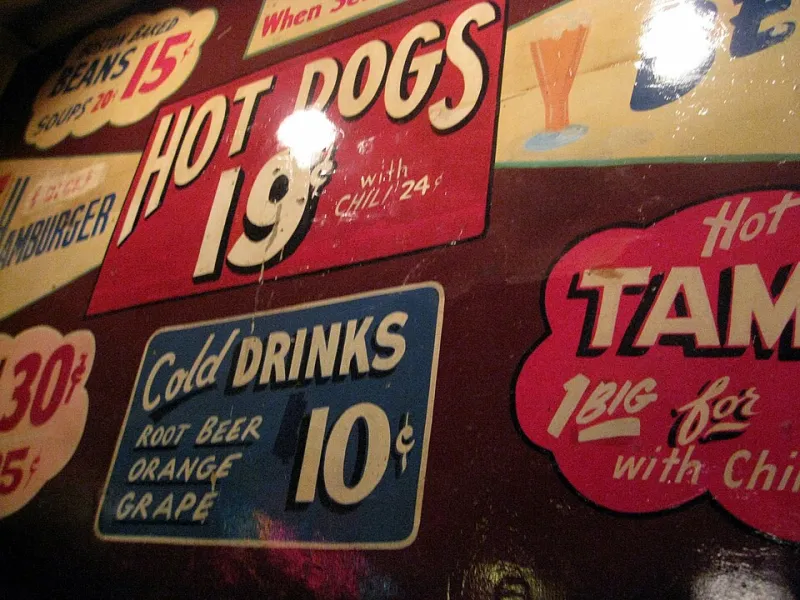
Photo: Vanesser III, CC BY-SA 2.0, via Wikimedia Commons
There is a wall near the register at a diner in almost every American small town. It is not designed. It is not curated by a museum. It started with one Polaroid taped up after a waitress retired, or a booth strip from a birthday breakfast, or a photo of the morning crew on the day the grill was replaced. Now it is a grid of faces: farmers in seed caps, nurses in scrubs, teenagers before prom, a baby in a car seat, a man who has ordered the same omelet since the Carter administration.
Nobody calls it an archive. That is exactly what it is.
Why a Wall Beats a Hard Drive
Digital photos are supposed to solve memory. In practice, they vanish into camera rolls and cloud accounts, sorted by date and never looked at again. A wall is different. It is public, physical, and slow. It requires someone to print the picture, ask permission, find tape, and choose a spot. That friction is the point. The wall records not just who was there, but who belonged enough to be remembered.
These collections are also deeply local. A museum might hold the town’s founding documents. The diner wall holds the town’s Tuesday mornings. It shows who sat with whom, which booths were claimed by which families, and how the same corner table changed hands over decades. It is social history with syrup on it.
The Curators Behind the Counter
Diner owners and managers are the unwitting curators. They decide who gets taped up and who does not. The criteria are rarely formal. Regulars get priority. Kindness counts. So does longevity. A photo of a celebrity passing through might go up for a week, but the wall belongs to the people who show up in the rain.
That makes the wall a social contract. To see your face there is to be told, quietly, that you are part of the place. To be left off is not always an insult; sometimes there is simply no room. Owners rotate photos when the wall gets crowded. The overflow goes into shoeboxes, folders, and drawers behind the counter. That is where the archive becomes fragile. The wall is the display. The boxes are the collection. And the boxes are usually the first thing lost when a diner changes hands.
What Gets Saved—and What Doesn’t
The wall favors people who show up. It can be cliquish. Newcomers may scan it and see no one who looks like them. That is a real limitation, and it is worth naming. An accidental archive still has an editorial bias. It preserves the regulars, the milestones, the staff who stayed. It often misses the people who passed through quickly or the neighbors who moved away.
Some owners are now scanning older photos and posting them online. That helps with preservation, but it changes the ritual. A wall is not a feed. It is a place you have to stand in front of, in bad lighting, next to a napkin dispenser. The inconvenience is part of the intimacy.
How to Read a Photo Wall Without Being a Creep
Treat the wall like a living room, not an exhibit. Do not touch the photos. Ask before you take pictures of them. If you want to know about a face, ask the server or owner—not another customer. Look for names and dates written on the back, but do not pull photos down to check. Tip well. The wall is not a tourist attraction, but it is a public trust.
If you recognize someone, resist the urge to announce it. Small towns run on discretion. The person in the photo might be someone’s grandmother, someone’s ex, or someone who died last spring. Let the wall hold what it holds.
If You’re Going to Add to the Collection
Ask first. Bring a physical photo—a Polaroid, a booth strip, a print—not a screenshot. Write names and the date on the back with an archival pen if the owner wants that. Do not expect it to go up immediately. Do not submit a glamour shot. The best contributions are ordinary: you and the staff after your hundredth visit, your kid at the counter on a snow day, the crew on the last night before a renovation.
Offer to help digitize. Many owners would love to scan the boxes but do not have the time. A local historical society or library might lend a scanner and a volunteer for an afternoon. That is a low-stakes way to keep the collection from disappearing without turning the diner into a museum.
Before the Lights Go Out
As of 2026, the pressures are familiar. Rents rise. Owners retire. Diners close. When a restaurant shuts down, the wall often goes into a box, and the box often goes to the curb. A few towns have started holding photo-wall rescue days, where residents bring scanners and archival sleeves and work through the collection before the building changes hands. It is not glamorous work. It is the kind of culture keeping that happens in folding chairs.
The wall of regulars is not a monument. It is a record of who ate here, who worked here, and who was seen. The next time you slide into a booth and notice the grid of faces near the register, look a little longer. The town is already writing itself down. The least we can do is pay attention.